Door 24: God Jul, Merry Christmas

Today opens the last door of our advent calendar and we are looking forward to a few holidays and relaxing time with families and friends. In Norway, it is also a good tradition to look back at the year before Christmas, called “Juleavslutning” (Christmas Gathering). Hence, as the […]

Door 21: Wonderful world of symbioses and a note on conserving biodiversity

Only three days until Christmas! For my final post in the advent calendar, I want to introduce our readers to an essential and complex phenomenon in nature, symbiosis. In our daily language, we might casually refer to symbiosis as a mutually beneficial relationship. However, in ecological terms, symbiosis […]

Day 20: Defending Against Rising Ocean Acidification

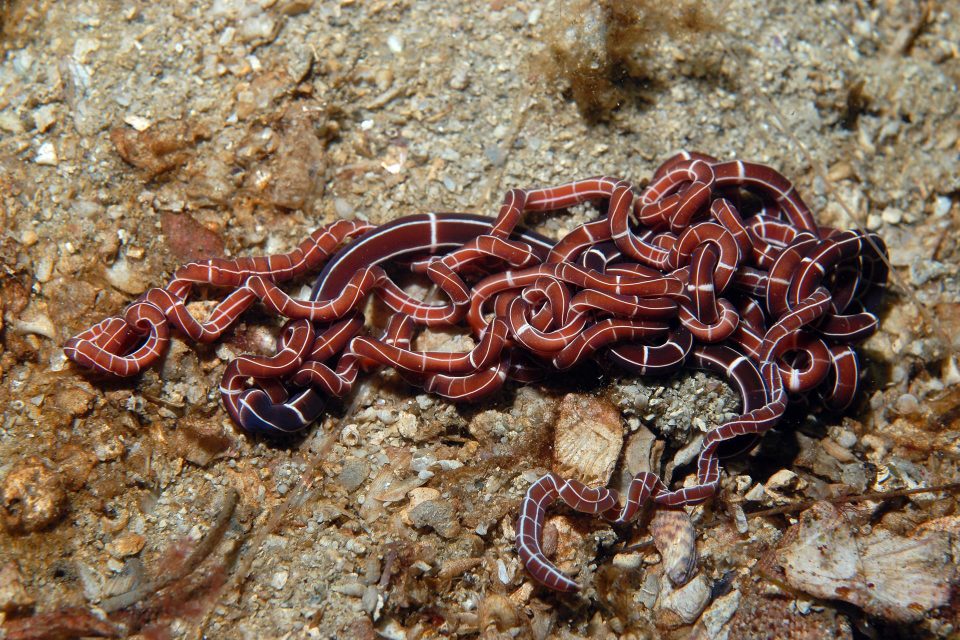
As we open the door on day 20, we look at a species in the Invertomics study category in the wild, and highlight a study from 2019 that places Platynereis in a modern context, to assess its capability to act as a model organism for studies of ocean […]

Raising the treasure of the collections for barcoding

The Biodiversity Genomic Europe (BGE) project has three streams dealing with the biodiversity crisis. In the blog so far, we have mostly presented about one stream, the European Reference Genome Atlas (ERGA) one concentrating on the genomic side of the project. However, another stream is concentrating on the […]

Door 17: Small flower but important plant

For today’s advent blog post, I would like to do something a little bit different. Continuing on the theme of biodiversity, climate and environment I would like to talk about a plant that is also a very important ecosystem in the sea: seagrass. I had the chance to […]

Door 16: Megarthrus of Mt. Cameroon and the Linnean Shortfall

Given this years theme of biodiversity, climate and conservation, I have decided to showcase a small part of my own MSc project for the advent calendar this year. As mentioned in a couple of the previous posts of the calendar, biodiversity is undergoing a crisis comparable only to […]

Door 12: Strongly biased representation of animal biodiversity in exhibitions

This year the museum has started to develop a new exhibition for our zoological museum. The former “Tree of Life” exhibition is now part of the new exhibitions in the geological museum. Accordingly, this hall is unused now and shall host a new exhibition about animal biodiversity. I […]

Door 10: A much needed tool for visualizing the invisible biodiversity

For our 10th door, I want to introduce you to the diversity of peculiar and complex group of tiny creatures, the protists, and an amazing source of recently published graphics for visualizing them. My project here in FEZ group (PolyPro3) features protists as main characters and I find […]

Door 9: Conservation of parasite biodiversity

Conservation of biodiversity is increasingly recognized as an important challenge, and numerous reports have addressed the ongoing loss of biodiversity and pinpointed the potential consequences. Even a sixth, man-induced mass extinction has been intensively discussed (e.g., https://www.nhm.ac.uk/discover/what-is-mass-extinction-and-are-we-facing-a-sixth-one.html). Frequently, the focus of such discussions is on endangered iconic species […]

Door 6: Biodiversity, Conservation, and Sticking Up For The Little Guy

For this year’s Advent Calendar, we’ve decided to theme ourselves around climate change and conservation. For my first blog entry, I’ve decided to write more of a background about the general need for marine biodiversity conservation, and some opinions on who should care, and why. I will then […]

Door 3: How exactly did dinosaurs go extinct?

For this year’s advent calendar, we have decided to focus on biodiversity, climate and environment. In relationship with climate change and the biodiversity crisis we face due to the ongoing extinction of many species, there is currently a vast amount of research done on the topic. Today, however, […]

Door 1: Sequencing genomes suggested by the community

It is the time of the year again and we are running our advent calendar again. The first door opened and reveals an update on the Biodiversity Genomics Europe (BGE) project. The project started about a year ago and it is time to take a first look at […]

The hidden invasion along the Norwegian coast

Last week Line Willersrud, a Master student in our group, successfully defended her Master thesis “Assessing genetic biodiversity in Caprellidae”. She worked very hard for her thesis by collecting caprellid species along the Norwegian coast as part of the Artsdatabanken project “Assessing biodiversity in the marine algae belt“, […]

Doing genomic research with a masonry trowel

When you think about genomic research and sequencing genomes like it is the goal of the Earth Biogenome Project (EBP), Biodiversity Genomics Europe (BGE) or InvertOmics you have in mind all these new fancy technologies called Next-Generation, Third-generation or High-through-put sequencing. All these amazing advances in technologies allowing […]

ERGA pilot project – what can we learn for future genome projects

As a proof of principle the European Reference Genome Atlas (ERGA) consortium initiated at the beginning a pilot study. Several sequences centers and different research projects contributed to this pilot study allowing the first sequencing of reference genomes across Europe and setting the stage for application of the […]

The importance of the small stuff for science

Yesterday, we published an preprint on the meiofauna and why it is important to study them and which scientific questions should be addressed next. The publication involved 42 researchers from 44 institutions all around the world. The research was initiated and led by Alejandro Martínez and Diego Fontaneto […]

Teaching about sea squirts, worms and skeleton shrimps in Drøbak

As part of the ArtsDatabanken project “Assessing biodiversity in the marine algae belt“, we taught a class of eager students and consultants about the species of our project. The course did not only comprise theoretical lectures, but really hands-on experience. We went out to different spots in Drøbak […]

The story about the Norwegian banker and the Hawaiian spiders ends – it was a great collaboration

Last week a long journey finally came to a result. If you remember, we were lucky to secure a Peder Sather grant to secure a collaboration between Rosemarie Gillespie’s lab and ours. Just a reminder from the last blog; Peder Sather was a banker and founder of the […]

Group of the month: Ostracoda

Sometimes, work and home come together in ways you don’t expect. I decided to get into aquascaping this summer, growing underwater plants and keeping nutrient cycles alive and self-sustaining between the soil, the plants, and small invertebrates. In my research, I was surprised to come across a little […]

ERGA pilot project – the selected species

As a proof of principle the European Reference Genome Atlas (ERGA) consortium initiated at the beginning a pilot study. Several sequences centers and different research projects contributed to this pilot study allowing the first sequencing of reference genomes across Europe and setting the stage for application of the […]

Group of the Month: Placozoa

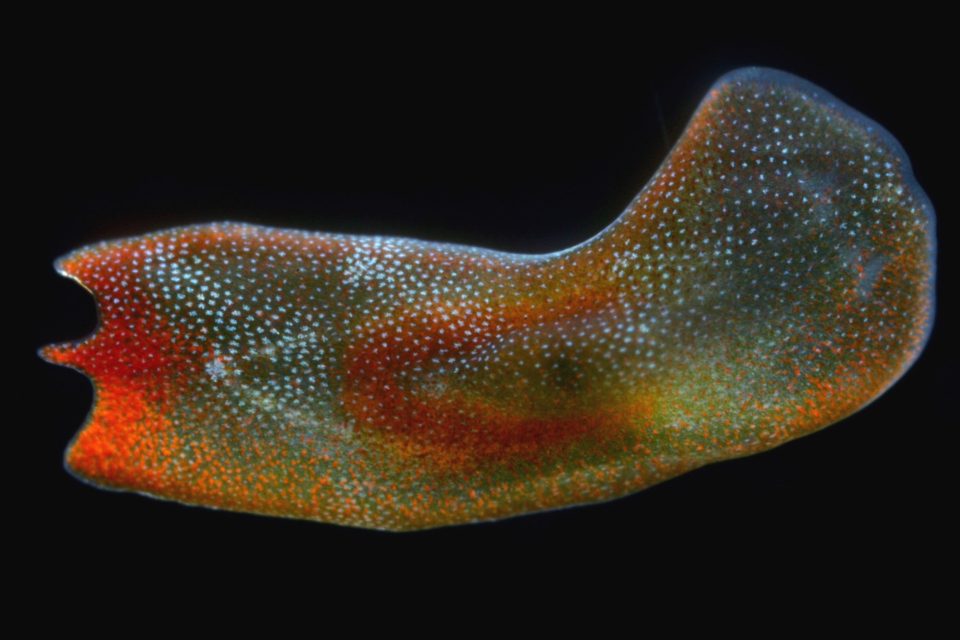
They may look a bit like bacteria, but Placozoans are actually animals! These microscopic blobs might, in fact, be key to understanding our own deep evolutionary history, and how the diversity of other animals came to be. Although they were discovered way back in 1883, there are only […]

Group of the Month: Monogenea

Monogeneans are a group of parasitic flatworms (Platyheminthes). The group is species-rich and systematists assign them to a class within the flatworms. Together with flukes (class Trematoda) and tapeworms (class Cestoda) they form the superclass Neodermata. The name-giving feature Neodermata is that the original epidermis is replaced by a […]

Group of the month: Feather duster worms (Annelida, Sabellidae)

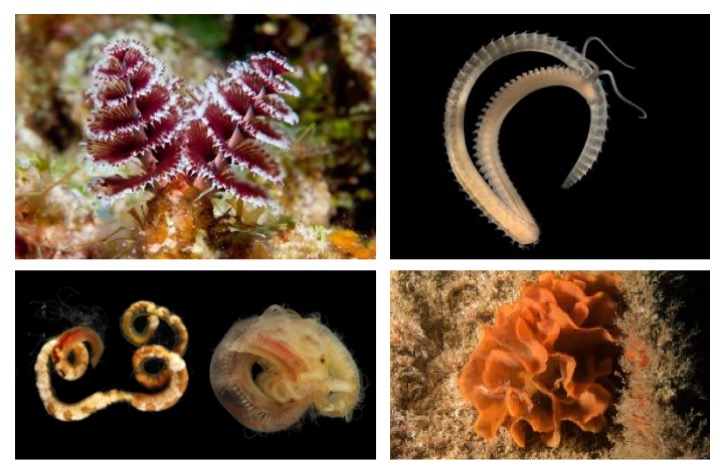
This month it is time for another group of polychaetes, the family Sabellidae. Sabellids are present from intertidal to abyssal marine waters all around the world (Rouse et al. 2022). They inhabit both soft substrates such as sand or mud and hard substrates such as rocks or coral […]

Staphylinid beetles, 24 new genetic markers and new insights into their taxonomy – Jørgen’s defence

Yesterday, Jørgen Hansen Starholm defended his Master thesis “Solving phylogenetic relationships within the Rove beetle genus Aleochara (Coleoptera: Staphylinidae) by utilizing a novel approach based on High Throughput Sequencing” successfully. The purpose of the thesis was to infer a phylogeny of Aleochara based on more nuclear markers and […]

Systematics and ecosystem function – can they go together?

In the summer of last year, Zoologica Scripta organized an international symposium around the topic of ‘The role of systematics for understanding ecosystem functions’ in the premises of Norwegian Academy of Sciences and Letters in Oslo. The symposium aimed at offering a forum for exploring and discussing trends […]