
Månedens gruppe – Psammodrilidae, en fortelling om viktigheten av habitat fremfor GPS-koordinater

Psammodrilidae er den siste av de interstitielle annelidfamiliene som skal presenteres her. De er foreløpig ikke kjent fra Norge eller Sverige, men de kan finnes på Grønland og kan derfor potensielt dukke opp som en del av MeioSkag-prosjektet. Uansett er de ganske spesielle interstitielle annelidfamilier. Alle familiene som […]

Group of the month – Psammodrilidae, a tale about the importance of habitat over GPS coordinates

Psammodrilidae is the last of the interstitial annelid families that shall be presented here. They are not known yet from Norway or Sweden but they can be found in Greenland and hence may potential turn up as part of MeioSkag project. In any case, they are quite peculiar […]

Månedens gruppe – Diurodrilidae, annelidfamilien som ønsket å være sin egen rekke

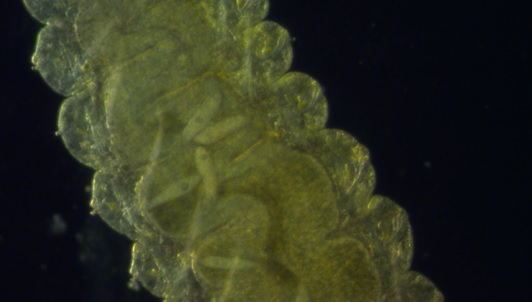
Diurodrilidae er en annen av de utelukkende interstitielle Annelida-familiene, og generelt sett ligner de noe på Dinophilidae, som har presentert seg tidligere. De er imidlertid mindre med en kroppslengde på omtrent 0,4 mm, og ligner dermed mer på gastrotricher. Sammen med en dorvilleid-art av slekten Noetenotrocha er Diurodrilus […]

Group of the month – Diurodrilidae, the annelid family that wanted to be its own phylum

Diurodrilidae are another of the exclusively interstitial families in Annelida and in general appearance it somewhat similar to Dinophilidae, which have presented before. However, they are smaller with a body length of just about 0.4 mm and hence in that are more similar to gastrotrichs. Together with a […]

A Worm that Broke a Billion-Year Rule

This is the story of an absolute rule breaker in the history of animal evolution, where a billion year old pact has been broken by a little tiny worm. Hydroides elegans lives in a hard calcified tube and attaches itself to ships and all kind of submerged man-made […]

Månedens gruppe: Protodrilidae – fra to til flere i ett strøk

Den neste annelidgruppen som er en del av MeioSkag-prosjektet vi skal utforske er familien Protodrilidae med minst 36 arter. Det er et fint eksempel på hvor viktige molekylære data er, ikke bare for å forstå deres evolusjon, men også deres taksonomi. Taksonomi er en av de eldste biologiske […]

Group of the month: Protodrilidae – from two to several in one stroke

The next annelid group that is part of the MeioSkag project we will explore is the family Protodrilidae with at least 36 species. It is a nice example on how important molecular data are in not only understanding their evolution but also their taxonomy. Taxonomy is one of […]

Månedens gruppe – Saccocirridae, de store små

Saccocirridae regnes som en meiofaunal eller interstitiell annelidfamilie, ettersom alle artene finnes i rommet mellom sandkornene. Mens noen få arter kan være ganske små med 3 mm, er flere ganske store med opptil 3 cm i lengde. I tillegg kan de være ganske brede med en kroppsbredde på […]

Group of the month – Saccocirridae, the large small ones

Saccocirridae is considered a meiofaunal or interstitial annelid family as all species are found in the space between the sand grains. While a few species might be quite small with 3 mm, several are quite large with up to 3 cm in length. Additionally, they can be quite […]

Månedens gruppe: Protodriloidae – bare to arter, men viktige

Protodriloidae er en familie med bare to arter i slekten Protodriloides. Sammen med familiene Saccocirridae og Protodrilidae er de en del av ordenen Protodrilida. Vi vil lære mer om de to andre familiene i løpet av de neste to månedene. Så gled dere til det. Begge Protodriloides-artene ser […]

Group of the month: Protodriloidae – just two species, but important

Protodriloidae is a family of only two species in the genus Protodriloides. Together, with the families Saccocirridae and Protodrilidae, they are part of the order Protodrilida. We will learn more about the other two families in the next two months. Hence, look forward to it. Both Protodriloides species […]

Månedens gruppe: Polygordiidae – de skinnende knutmark

Den neste interstitielle annelidfamilien jeg vil presentere for dere, er polygordiidene. Selv om disse markene er en del av MeioSkag-prosjektet vårt, som undersøker meiofauna-arter i Skagerrak, er de ikke egentlig meiofauna, da kroppslengden deres varierer fra 1 til 10 cm. De er altså ganske store. Men fordi de […]

Group of the month: Polygordiidae – the shiny knot worms

The next interstitial annelid family, I would like to present to you are the polygordiids. Even though these worms are part of our MeioSkag project investigating meiofaunal species in the Skagerrak, they are not truly meiofauna as their body length ranges from 1-10 cm. Hence, they are quite […]

Door 23: Who is walking on the snow? – Not just snow scorpionflies!

Door 9 of this advent calendar was focusing on snow scorpionflies (genus Boreus), little noticed but very interesting group of insect whose adults are active in winter and can be easily spotted walking on snow when the temperature is staying close to zero degree Celsius. Yet Boreus is […]

Door 22: Future Marine Climate Refugia by 2100

Climate change is an issue that has targeted, and continues to target, the tolerance limits of many organisms. Efforts by international institutions in the form of conventions primarily serve as a serious warning against destructive human activities and, secondly, as an attempt to address their consequences, including the […]

Door 21: Winter solstice – When the world pauses

Today is the winter solstice. Here in the northern hemisphere, it’s the shortest day and the longest night, a turning point when darkness reaches its peak and the slow return of light begins. For humans, the solstice often inspires reflection, celebration, or a simple awareness that winter has […]

Dør 20: Diputasen – Å være på den andre siden

En doktoravhandling er et viktig skritt i karrieren til en ung forsker. Men for disputasen trengs det faktisk tre til tango i Norge – kandidaten og de to eksterne opponentene. I år hadde jeg etter noen år igjen æren av å være en av de eksterne opponentene til […]

Door 20: PhD defense – Being on the other side

A PhD defense is an important step in the career of a young researcher. However, for the defense itself it needs actually three to tango in Norway – the candidate and the two external opponents. This year, I had after some years again the honor to be one […]

Door 19: New paper out: Insight into the phylogeny of the intertidal beetle genus Aegialites (Coleoptera, Salpingidae).

Published in Zoologica Scripta: link here. The paper named “Insight into the phylogeny of the intertidal beetle genus Aegialites (Coleoptera, Salpingidae)“, by Marianne N. Haugen, Vladimir I. Gusarov, Derek S. Sikes & Torsten H. Struck is now published in Zoologica Scripta. This paper, which is an important part […]

Door 18: The Gift That Takes a Year: The Quiet Story Behind Chinese Cordyceps

Written by Hilda Jakin Osei-Mireku What a “zombie fungus” and a ghost moth larva can teach us about patience, transformation, and waiting during Advent Advent is a season of waiting, anticipation, and preparation. While many of us count down the days to Christmas, high in regions such as […]

Door 17: Escaping Santa – reindeer of Svalbard

Svalbard reindeer running, photographed by Bjørn Christian Tørrissen, under the Creative Commons.

Door 16: Is a Nobel Prize in Economic Sciences relevant for biology researchers?

I have to admit that I do not follow the annual announcements of the various Nobel Prizes with equal interest. Perhaps not surprising, the Nobel Prize for Economic Sciences usually scores rather low as compared to e.g., the Nobel Prize in Physiology or Medicine that is by default […]

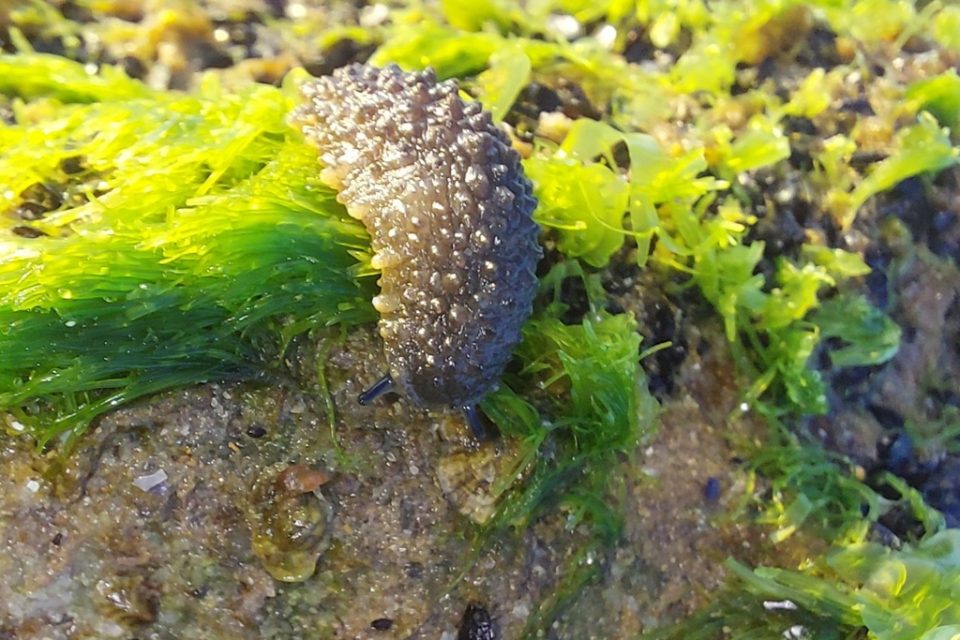
Door 15: Poecilogony  – the rare phenomenon of larval developmental variation

For benthic invertebrates, the ability to disperse is usually limited to the short time period when they are larvae. A common way is to produce huge masses of tiny planktonic larvae that float and feed among the plankton, until they reach a big enough size to metamorphose to […]

Door 14: Mediterranean monk seals, out of the blue

It was just a week ago, while waiting to embark on a plane, that I received a very unexpected news: a Mediterranean monk seal (Monachus monachus) has been sighted near my hometown, in the North-western Adriatic Sea. As I first approached the world of pinnipeds through this species, […]