Here we blog about our research on taxonomy with a special emphasis on cryptic species, which is at present done by PhD and Master theses.
Category: Taxonomy
Door 19: New paper out: Insight into the phylogeny of the intertidal beetle genus Aegialites (Coleoptera, Salpingidae).
Published in Zoologica Scripta: link here. The paper named “Insight into the phylogeny of the intertidal beetle genus Aegialites (Coleoptera, Salpingidae)“, by Marianne N. Haugen, Vladimir I. Gusarov, Derek S. Sikes & Torsten H. Struck is now published in Zoologica Scripta. This paper, which is an important part […]
Door 10 – Species delimitation
In this blog post, I wish to write about species delimitation. What it is and methods we have to delimit species from each other. Species delimitation — what it is and why it matters Species delimitation is the set of methods and conceptual approaches used to determine where […]
Door 6: Taxonomy – past and present
Introduction Taxonomy is the science of classifying, naming, and describing organisms based on shared characteristics. The classification of living things, has its origins in ancient Greece and in its modern form dates back nearly 250 years, to Carl Von Linné’s Systema Naturae (1735) where Linnaeus introduced the binomial […]
Door 5: Horsetail (Equisetum) species still hybridise, 100 million years after they diverged
In a previous blogpost, I asked the question how long species are able to form hybrids after their lineages diverged — and I showed that certain species of flowering plants (angiosperms) retain this ability for at least 50 million years (Ma). This question is of particular significance because […]
Yet another Artsdatabanken project successfully finished
Annelida, or segmented worms, is a vast and diverse group of metazoans of over 20000 species that includes, amongst others, earthworms, leeches, echiurids, sipunculids and polychaetes. With over 300 species the polychaete family Cirratulidae is one of the most species-rich and common in benthic assemblages in a variety […]
Nok et Artsdatabanken-prosjekt vellykket fullført
Annelida, eller segmenterte ormer, er en stor og mangfoldig gruppe av metazoer med over 20 000 arter, som blant annet omfatter meitemark, igler, echiurider, sipunculider og polychaeter. Med over 300 arter er polychaete-familien Cirratulidae en av de mest artsrike og vanlige i bentiske samfunn i en rekke habitater. […]
The unknown biodiversity of annelids in European waters – a cirratulid case study
The marine biodiversity of Europe is generally considered well known comparison to other regions, especially of the global South. However, also in European waters, some habitats and regions have been scarcely studied and many species could remain to be discovered and described. This has been shown, for example, […]
Den ukjente biologiske mangfoldigheten av annelider i europeiske farvann – en fallstudie av cirratulider
Den marine biologiske mangfoldigheten i Europa anses generelt å være godt kjent sammenlignet med andre regioner, spesielt i den globale sørlige halvkule. Imidlertid er også i europeiske farvann noen habitater og regioner knapt studert, og mange arter kan fortsatt være uoppdagede og ubeskrevne. Dette er for eksempel vist […]
Group of the month, August: Rough sharks (Genus Oxynotus)
Drawing a shark could be fun, so why not following a step-by-step tutorial for it? As many suggest, let`s start by deconstruct your soon to be shark in simple geometrical figures. A triangle can be the head, a dorsal fin or a tail. One or two rectangles for […]
Månedens gruppe for juni. Myrfiolene – ei artsgruppe der hybridisering skaper, endrer og fjerner mangfold
Hvorfor er denne gruppa interessant å studere?Myrfiolgruppa (Viola seksjon Plagiostigma, underseksjon Stolonosae; Violaceae) er ei av flere artergrupper i den nordlige tempererte sonen som diversifiserte som respons på global nedkjøling de siste ~5 millioner år. Å studere artene i denne gruppa gir derfor mulighet til å belyse de […]
The marsh violets – a lineage where hybridisation creates, modifies and deletes diversity
Why is this group interesting to study? The marsh violet group (Viola sect. Plagiostigma, subsect. Stolonosae, in part; Violaceae) is one of numerous north-temperate species groups that diversified in response to climate cooling in the last ~5 million years. Thus, studying this group has the potential to elucidate […]
Group of the Month March: Laboulbeniales
Let me introduce you to the Group of the Month for March: A fungus! At this point you are probably thinking to yourself: “Wait a minute, that’s not a fungus. That’s clearly just a beetle…” And for the most part, you’d be right! Let’s zoom in a bit […]
Månedens Gruppe Mars: Laboulbeniales
La meg presentere månedens gruppe for mars: En sopp! Nå tenker du sikkert for deg selv: «Vent, det der er ikke en sopp. Det er helt klart bare en bille…» Og det er i og for seg riktig! La oss zoome litt lengre inn: Tankerekken fortsetter: «Hmm… Det […]
Hva er det neste som skjer med smådyrene?
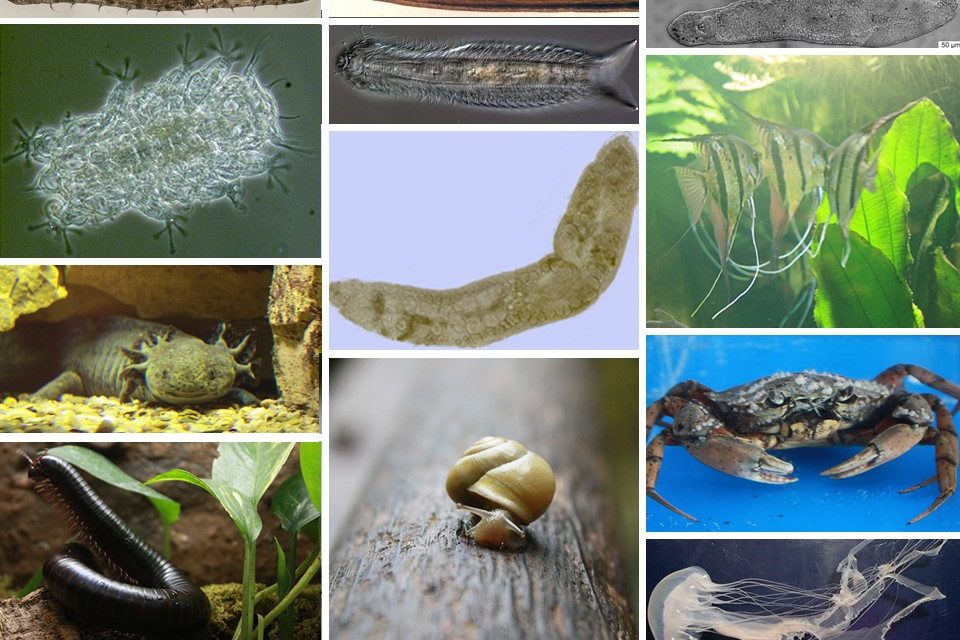
I forrige uke publiserte vi en artikkel om meiofauna og hvorfor det er viktig å studere dem, og hvilke vitenskapelige spørsmål som bør tas opp i neste omgang. Artikkelen «Fundamental questions in meiofauna research highlight how small but ubiquitous animals can improve our understanding of Nature» ble publisert […]
What’s up next for the small animals?
Last week, we published an paper on meiofauna and why it is important to study them and which scientific questions should be addressed next. The paper “Fundamental questions in meiofauna research highlight how small but ubiquitous animals can improve our understanding of Nature” was published in Communications Biology. […]
Door 13: Discovering hidden microscopic diversity in Norway
Whenever you hear the word fungi, chances are high that you are thinking of the colourful variation of mushroom fruiting bodies popping up in high abundance during the fall. Or maybe you’re thinking of the vast webs of underground mycelia that most fungi produce. For some, the frightening […]
Dør 13: Oppdag det skjulte mikroskopiske mangfoldet i Norge
Når du hører ordet sopp, er sjansen stor for at du tenker på den fargerike variasjonen av soppfruktlegemer som popper opp i store mengder om høsten. Eller kanskje du tenker på de enorme nettene av underjordiske mycel som de fleste sopper produserer. For noen er kanskje den skremmende […]
Door 11: Finding new species to Norway – how easy can it be?
For most people, discovering new species seems like an extraordinary event, something that happens only once in a lifetime or at least something very rare. However, for some groups of organisms, particularly understudied ones, it’s actually very easy to come across a new species to science and perhaps […]
Door 10: Habitat fragmentation shaping the beetle communities of African mountains
Human-mediated alteration and conversion of forest ecosystems cause massive changes in the species compositions of communities in affected areas. The large scale monetary incentives of deforestation, especially in threatened tropical rainforests, plays a massive role in the rapid loss of habitats and nature seen worldwide. Even in the […]
Dør 10: Fragmentering av habitater former billesamfunnene i afrikanske fjell
Menneskeskapte endringer og omdanning av skogøkosystemer fører til massive endringer i artssammensetningen i de berørte områdene. De storstilte økonomiske insentivene til avskoging, særlig i truet tropisk regnskog, spiller en viktig rolle i det raske tapet av habitater og natur som vi ser verden over. Selv i det langt […]
Door 8: Erasmus – exchange of knowledge across Europe
CEG has a long standing tradition of hosting Erasmus students for an internship. This year we also had two students visiting us from Sardinia during the summer. “Erasmus+ is the EU’s program to support education, training, youth and sport in Europe.” It is a program that facilities knowledge […]
Dør 8: Erasmus – utveksling av kunnskap på tvers av Europa
CEG har en lang tradisjon for å være vertskap for Erasmus-studenter på praksisopphold. I år hadde vi også to studenter på besøk fra Sardinia i løpet av sommeren. «Erasmus+ er EUs program for å støtte utdanning, opplæring, ungdom og idrett i Europa.» Det er et program som legger […]
Door 2: Artificial intelligence and taxonomy
The recnt years have seen a hand over fist development of artificial intelligence (AI) applications, and such applications affect the daily life of scientists at an increasing pace, and the ongoing development may in the near future also modify our understanding of science in general. For biologist an […]
CEG with an even stronger commitment to Norwegian Biosystematics
After an already strong commitment to Norwegian Biodiversity Genomics earlier this year, CEG showed an even stronger commitment to Norwegian Biosystematics at the first ever “Norsk symposium i biosystematikk” organized by Artsdatankena and the Natural History Museum last week in Oslo. With 10 out of 49 contributed talks […]
CEG med enda sterkere satsing på norsk biosystematikk
Etter et allerede sterkt engasjement for norsk biodiversitetsgenomikk tidligere i år, viste CEG et enda sterkere engasjement for norsk biosystematikk på tidenes første «Norsk symposium i biosystematikk» som ble arrangert av Artsdatankena og Naturhistorisk Museum i Oslo forrige uke. Med 10 av 49 foredrag og “flash talks” bidro […]