We started this blog with an advent calendar for 2020 summarizing the highlights of our research year and presenting ourselves. Since we have continued that tradition.
Category: Advent calendar
Door 23: Who is walking on the snow? – Not just snow scorpionflies!
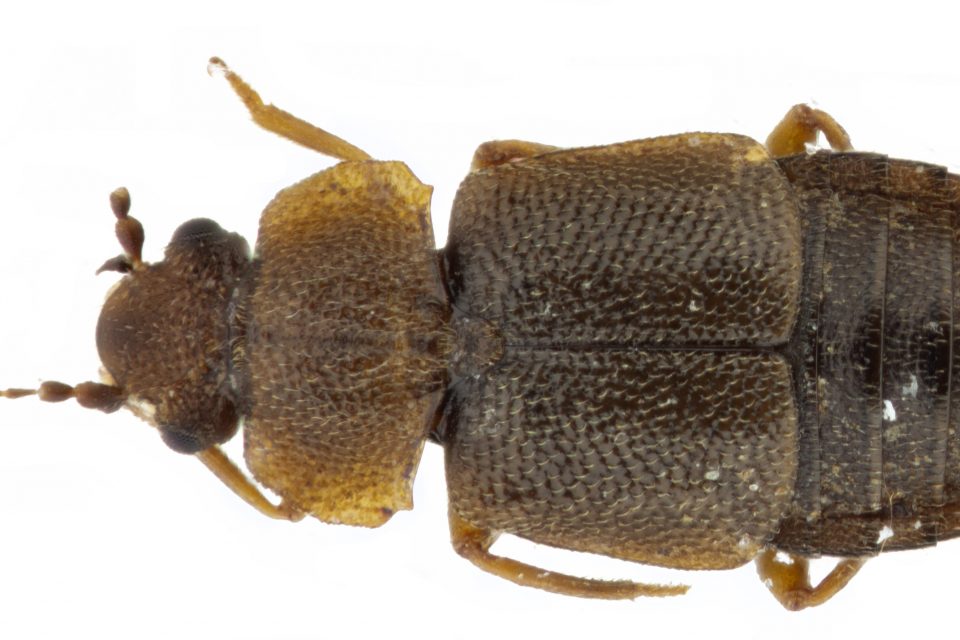
Door 9 of this advent calendar was focusing on snow scorpionflies (genus Boreus), little noticed but very interesting group of insect whose adults are active in winter and can be easily spotted walking on snow when the temperature is staying close to zero degree Celsius. Yet Boreus is […]
Door 22: Future Marine Climate Refugia by 2100
Climate change is an issue that has targeted, and continues to target, the tolerance limits of many organisms. Efforts by international institutions in the form of conventions primarily serve as a serious warning against destructive human activities and, secondly, as an attempt to address their consequences, including the […]
Door 21: Winter solstice – When the world pauses
Today is the winter solstice. Here in the northern hemisphere, it’s the shortest day and the longest night, a turning point when darkness reaches its peak and the slow return of light begins. For humans, the solstice often inspires reflection, celebration, or a simple awareness that winter has […]
Door 20: PhD defense – Being on the other side
A PhD defense is an important step in the career of a young researcher. However, for the defense itself it needs actually three to tango in Norway – the candidate and the two external opponents. This year, I had after some years again the honor to be one […]
Dør 20: Diputasen – Å være på den andre siden
En doktoravhandling er et viktig skritt i karrieren til en ung forsker. Men for disputasen trengs det faktisk tre til tango i Norge – kandidaten og de to eksterne opponentene. I år hadde jeg etter noen år igjen æren av å være en av de eksterne opponentene til […]
Door 19: New paper out: Insight into the phylogeny of the intertidal beetle genus Aegialites (Coleoptera, Salpingidae).
Published in Zoologica Scripta: link here. The paper named “Insight into the phylogeny of the intertidal beetle genus Aegialites (Coleoptera, Salpingidae)“, by Marianne N. Haugen, Vladimir I. Gusarov, Derek S. Sikes & Torsten H. Struck is now published in Zoologica Scripta. This paper, which is an important part […]
Door 18: The Gift That Takes a Year: The Quiet Story Behind Chinese Cordyceps
Written by Hilda Jakin Osei-Mireku What a “zombie fungus” and a ghost moth larva can teach us about patience, transformation, and waiting during Advent Advent is a season of waiting, anticipation, and preparation. While many of us count down the days to Christmas, high in regions such as […]
Door 17: Escaping Santa – reindeer of Svalbard
Svalbard reindeer running, photographed by Bjørn Christian Tørrissen, under the Creative Commons.
Door 16: Is a Nobel Prize in Economic Sciences relevant for biology researchers?
I have to admit that I do not follow the annual announcements of the various Nobel Prizes with equal interest. Perhaps not surprising, the Nobel Prize for Economic Sciences usually scores rather low as compared to e.g., the Nobel Prize in Physiology or Medicine that is by default […]
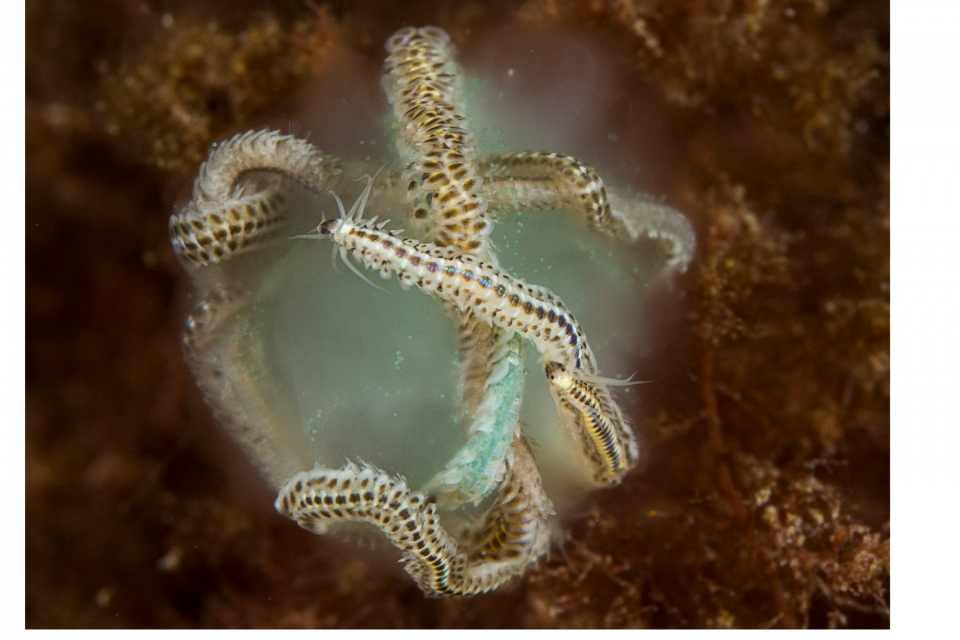
Door 15: Poecilogony – the rare phenomenon of larval developmental variation
For benthic invertebrates, the ability to disperse is usually limited to the short time period when they are larvae. A common way is to produce huge masses of tiny planktonic larvae that float and feed among the plankton, until they reach a big enough size to metamorphose to […]
Door 14: Mediterranean monk seals, out of the blue
It was just a week ago, while waiting to embark on a plane, that I received a very unexpected news: a Mediterranean monk seal (Monachus monachus) has been sighted near my hometown, in the North-western Adriatic Sea. As I first approached the world of pinnipeds through this species, […]
Door13: Suez Canal, why a one-way road?
If you look at the world today, it is impossible to ignore how deeply humans have reshaped it. We have turned forests into deserts and deserts into parks. We have warmed the atmosphere, melted ice sheets, and yet many still insist climate change is just a myth. Part […]
Door 12: Is AI the solution to overcome the challenges in sequencing genomes?
In 2018, Lewin et al proposed the ambitious goal to sequence a reference genome of each eukaryotic species on Earth within 10 years called the moonshot of biology. This proposal let to the establishment of the Earth Biogenome Project (EBP) and gained a lot of traction and momentum […]
Dør 12: Er KI løsningen for å overvinne utfordringene ved sekvensering av genomer?
I 2018 foreslo Lewin et al det ambisiøse målet å sekvensere et referansegenom for hver eukaryotisk art på jorden innen 10 år, kalt «moonshot of biology». Dette forslaget førte til etableringen av Earth Biogenome Project (EBP), som fikk stor oppmerksomhet og fart i etterkant. Dette førte til etableringen […]
Door 11: Recent news on tree ferns – the stasis-dynamism paradox in tree ferns resolved?
Earlier this year in January I reported in a CEG blog contribution about tree (or tree-like) ferns, a holiday discovery during a visit to the Adelaide Botanic Garden located in the capital of South Australia. The visit had inspired me to learn more about the biology of this […]
Door 10 – Species delimitation
In this blog post, I wish to write about species delimitation. What it is and methods we have to delimit species from each other. Species delimitation — what it is and why it matters Species delimitation is the set of methods and conceptual approaches used to determine where […]
Door 9: Who is walking on the snow? – Snow scorpionflies, of course!
Winter in Scandinavia is not considered an insect collecting season. Snow and ice are good for skiing and skateboarding, not for butterfly hunting. At winter, northern entomologists may enjoy a break, free of collecting work, finally with plenty of time to sort, look at and identify what was […]
Door 8: Jutulhogget – a geological heritage site discovered during the CEG group retreat
In the end of September, the CEG research group had its annual retreat. This year, we aimed for Røros, a small mining town in the east of Norway. On the way to the destination we noticed that we would pass the Jutulhogget, a spectacular geological formation a bit […]
Door 7 – Dippers in Oslo
For this December Sunday, I want to tell you about my favourite bird that also happens to be the national bird of Norway – the white-throated dipper (Cinclus cinclus, fossekall på norsk). These lovely little dippers can be found in Oslo as well, and I had a pleasure […]
Door 6: Taxonomy – past and present
Introduction Taxonomy is the science of classifying, naming, and describing organisms based on shared characteristics. The classification of living things, has its origins in ancient Greece and in its modern form dates back nearly 250 years, to Carl Von Linné’s Systema Naturae (1735) where Linnaeus introduced the binomial […]
Door 5: Horsetail (Equisetum) species still hybridise, 100 million years after they diverged
In a previous blogpost, I asked the question how long species are able to form hybrids after their lineages diverged — and I showed that certain species of flowering plants (angiosperms) retain this ability for at least 50 million years (Ma). This question is of particular significance because […]
Door 4: The golden beauty of nature
The order and balance found in nature is truly mesmerising. Although studying biology daily and coming across all the phenomena almost every day, I still find myself astonished by the ideas creating the world around us. The complexity of many systems seems to be detached from the natural […]
Door 3: A Look Back at CEG 2025
Advent calendars usually contain tiny samples of what a brand has created that year. So, I thought I’d do the same, except instead of chocolates or a mascara, I’m going to share some snapshots of moments from our own little group CEG in and out of the museum. […]
Door 2: All I want for Xmas is …the largest animal on the planet
While working in the Museum collections, I came across a small cardboard box containing few scattered bones. In that moment, I found kind of amusing that such a tiny box contained the remains of the largest living animal: the blue whale (Balaenoptera musculus Linnaeus, 1758). Whales have captured […]