Group of the month: Protodriloidae – just two species, but important

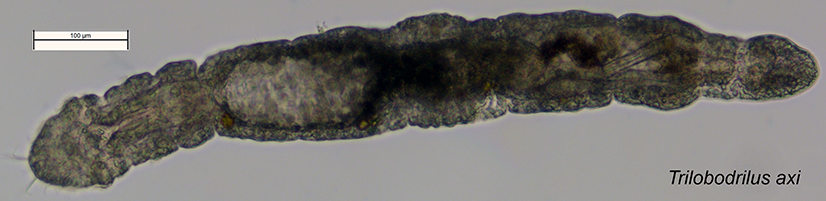
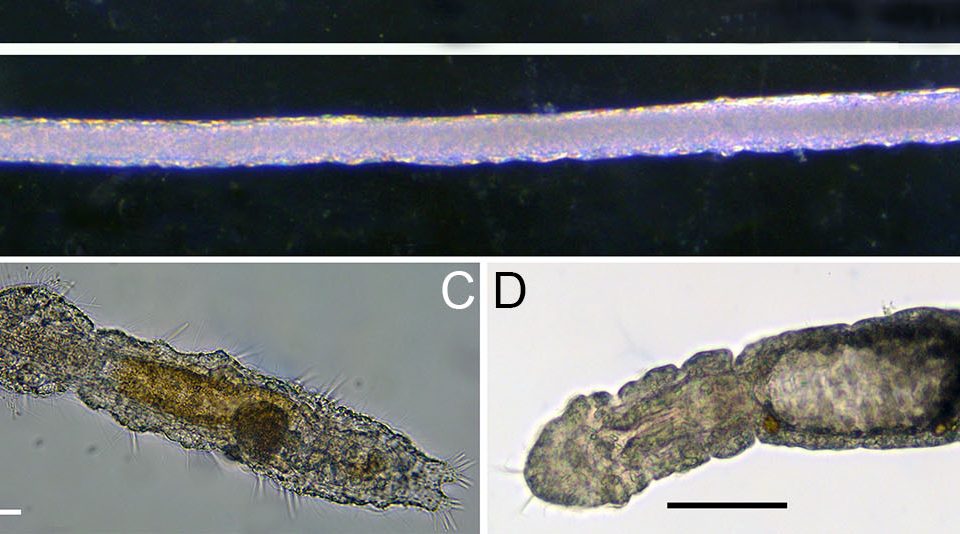
Protodriloidae is a family of only two species in the genus Protodriloides. Together, with the families Saccocirridae and Protodrilidae, they are part of the order Protodrilida. We will learn more about the other two families in the next two months. Hence, look forward to it. Both Protodriloides species […]

Group of the month: Polygordiidae – the shiny knot worms

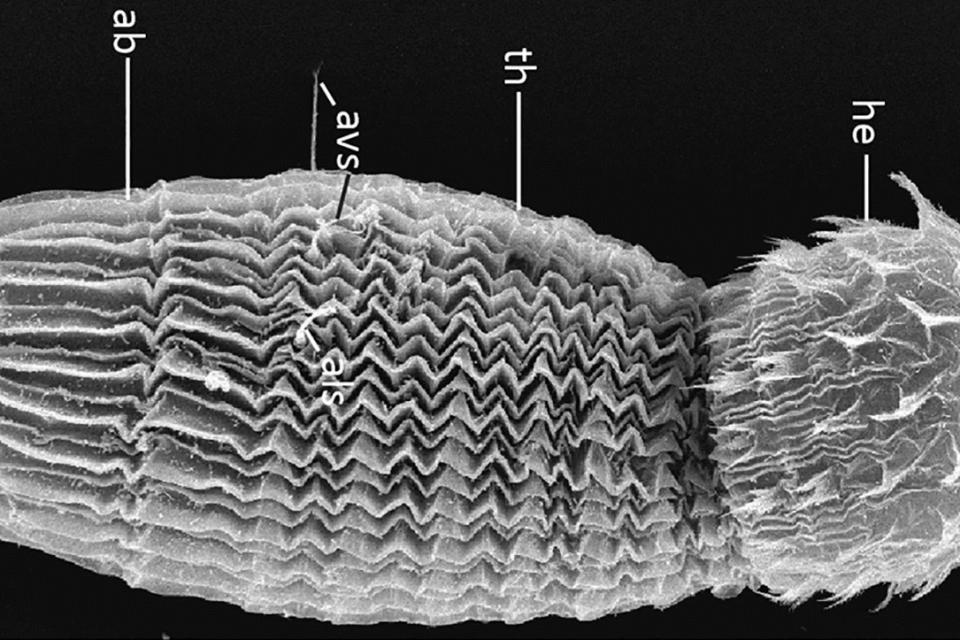
The next interstitial annelid family, I would like to present to you are the polygordiids. Even though these worms are part of our MeioSkag project investigating meiofaunal species in the Skagerrak, they are not truly meiofauna as their body length ranges from 1-10 cm. Hence, they are quite […]

Månedens gruppe: Polygordiidae – de skinnende knutmark

Den neste interstitielle annelidfamilien jeg vil presentere for dere, er polygordiidene. Selv om disse markene er en del av MeioSkag-prosjektet vårt, som undersøker meiofauna-arter i Skagerrak, er de ikke egentlig meiofauna, da kroppslengden deres varierer fra 1 til 10 cm. De er altså ganske store. Men fordi de […]

Door 6: Taxonomy – past and present

Introduction Taxonomy is the science of classifying, naming, and describing organisms based on shared characteristics. The classification of living things, has its origins in ancient Greece and in its modern form dates back nearly 250 years, to Carl Von Linné’s Systema Naturae (1735) where Linnaeus introduced the binomial […]

Door 5: Horsetail (Equisetum) species still hybridise, 100 million years after they diverged

In a previous blogpost, I asked the question how long species are able to form hybrids after their lineages diverged — and I showed that certain species of flowering plants (angiosperms) retain this ability for at least 50 million years (Ma). This question is of particular significance because […]

Group of the month: The unusual interstitial annelids – Nerillidae

As part of our new ArtsDatabanken project MeioSkag, we are investigating interstitial and meiofaunal species occurring in sediments of the Norwegian part of the Skagerrak. Among others, this includes the so-called interstitial families within Annelida. In this series “Group of the month”, I will now present the different […]

Månedens gruppe: De uvanlige interstitielle leddmarkene – Nerillidae

Som en del av vårt nye ArtsDatabanken-prosjekt MeioSkag undersøker vi interstitielle og meiofauna arter som forekommer i sedimenter i den norske delen av Skagerrak. Dette omfatter blant annet de såkalte interstitielle familiene innenfor Annelida. I denne serien «Månedens gruppe» vil jeg nå presentere de ulike familiene som ikke […]

Yet another Artsdatabanken project successfully finished

Annelida, or segmented worms, is a vast and diverse group of metazoans of over 20000 species that includes, amongst others, earthworms, leeches, echiurids, sipunculids and polychaetes. With over 300 species the polychaete family Cirratulidae is one of the most species-rich and common in benthic assemblages in a variety […]

Nok et Artsdatabanken-prosjekt vellykket fullført

Annelida, eller segmenterte ormer, er en stor og mangfoldig gruppe av metazoer med over 20 000 arter, som blant annet omfatter meitemark, igler, echiurider, sipunculider og polychaeter. Med over 300 arter er polychaete-familien Cirratulidae en av de mest artsrike og vanlige i bentiske samfunn i en rekke habitater. […]

The unknown biodiversity of annelids in European waters – a cirratulid case study

The marine biodiversity of Europe is generally considered well known comparison to other regions, especially of the global South. However, also in European waters, some habitats and regions have been scarcely studied and many species could remain to be discovered and described. This has been shown, for example, […]

Den ukjente biologiske mangfoldigheten av annelider i europeiske farvann – en fallstudie av cirratulider

Den marine biologiske mangfoldigheten i Europa anses generelt å være godt kjent sammenlignet med andre regioner, spesielt i den globale sørlige halvkule. Imidlertid er også i europeiske farvann noen habitater og regioner knapt studert, og mange arter kan fortsatt være uoppdagede og ubeskrevne. Dette er for eksempel vist […]

Group of the month, August: Rough sharks (Genus Oxynotus)

Drawing a shark could be fun, so why not following a step-by-step tutorial for it? As many suggest, let`s start by deconstruct your soon to be shark in simple geometrical figures. A triangle can be the head, a dorsal fin or a tail. One or two rectangles for […]

Group of the months: The nicking worms (Kamptozoa or Entoprocta)

The phylum Entoprocta (also called Kamptozoa) are known as the nicking worm. Globally, 260 species are known to date and 30 in Norway. The individuals are small with a body size of 0.5 – 7 mm. However, besides solitary species, other species build colonies and these can be […]

Group of the month, May: The Krill

Featured photo: Euphausia superba, the Antarctic krill. Photo by Professor Dr. habil. Uwe Kils, uploaded to en.wikipedia.org. This file is licensed under the Creative Commons Attribution-Share Alike 3.0 Unported license. https://creativecommons.org/licenses/by-sa/3.0/ Tiny but mighty, krill are among the most abundant animals on Earth and their collective role is […]

Group of the Month March: Laboulbeniales

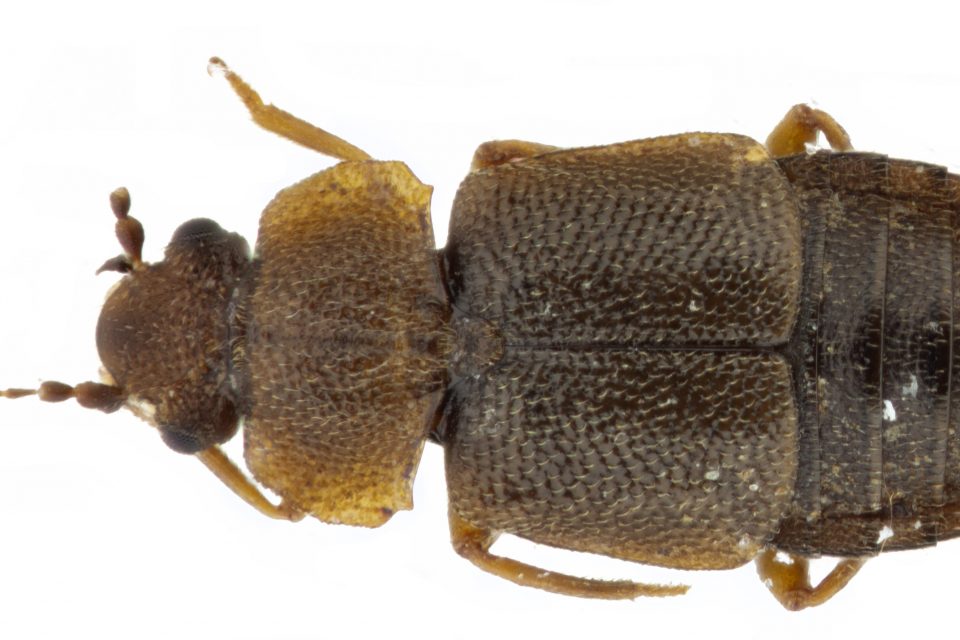
Let me introduce you to the Group of the Month for March: A fungus! At this point you are probably thinking to yourself: “Wait a minute, that’s not a fungus. That’s clearly just a beetle…” And for the most part, you’d be right! Let’s zoom in a bit […]

Månedens Gruppe Mars: Laboulbeniales

La meg presentere månedens gruppe for mars: En sopp! Nå tenker du sikkert for deg selv: «Vent, det der er ikke en sopp. Det er helt klart bare en bille…» Og det er i og for seg riktig! La oss zoome litt lengre inn: Tankerekken fortsetter: «Hmm… Det […]

Månedens gruppe: Cycliophora – ringbærerne og den «norske» fylumet

Denne måneden vil jeg presentere en svært liten dyregruppe – både i størrelse og i antall arter. Cycliophora, som betyr ringbærer, består av nøyaktig én slekt og to beskrevne arter. Disse artene er ca. 350 µm i kroppslengde, noe som er mindre enn en halv millimeter og omtrent […]

Årets siste forsvar – med suksess

Denne uken var den siste hele uken før juleferien, hvor alle går på sin velfortjente ferie. Men til tross for at det har vært en rolig uke på museet, var det en stor dag for Nhu Dinh i dag. Hun forsvarte nemlig masteroppgaven sin i dag. Gratulerer Nhu […]

The last defense of the year – successfully

This week was the last full week before the Christmas break where everybody goes on their well deserved holidays. However, despite all the slowing down at the museum this week, today was a big day for Nhu Dinh. She successfully defended her Master thesis today. Congratulations Nhu Dinh. […]

Door 15: CEG involvement in the European BGE genome sequencing project

CEG research group members Torsten Struck and myself are coordinating the task of Community Sampling, within WP5 of the the EU-funded BioGenomics Europe project. We have now completed our task, well before the deadline of February 2025 set by BGE. Our task began with annoucing two public calls, […]

Door 13: Discovering hidden microscopic diversity in Norway

Whenever you hear the word fungi, chances are high that you are thinking of the colourful variation of mushroom fruiting bodies popping up in high abundance during the fall. Or maybe you’re thinking of the vast webs of underground mycelia that most fungi produce. For some, the frightening […]

Dør 13: Oppdag det skjulte mikroskopiske mangfoldet i Norge

Når du hører ordet sopp, er sjansen stor for at du tenker på den fargerike variasjonen av soppfruktlegemer som popper opp i store mengder om høsten. Eller kanskje du tenker på de enorme nettene av underjordiske mycel som de fleste sopper produserer. For noen er kanskje den skremmende […]

Door 11: Finding new species to Norway – how easy can it be?

For most people, discovering new species seems like an extraordinary event, something that happens only once in a lifetime or at least something very rare. However, for some groups of organisms, particularly understudied ones, it’s actually very easy to come across a new species to science and perhaps […]

Christmas in the Ocean: The Marvel of Christmas Tree Worms

Today, I want to introduce a fascinating group of worms that are particularly relevant during the Christmas season. Known as Christmas tree worms, these marine annelids belong to the family Serpulidae. They are renowned for their radiolar crowns and their habit of dwelling within calcareous tubes attached on […]

Dør 10: Fragmentering av habitater former billesamfunnene i afrikanske fjell

Menneskeskapte endringer og omdanning av skogøkosystemer fører til massive endringer i artssammensetningen i de berørte områdene. De storstilte økonomiske insentivene til avskoging, særlig i truet tropisk regnskog, spiller en viktig rolle i det raske tapet av habitater og natur som vi ser verden over. Selv i det langt […]