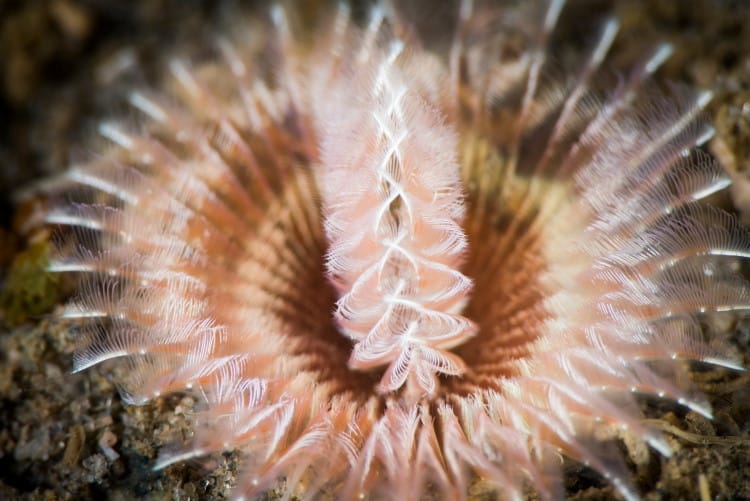
Månedens gruppe: Protodrilidae – fra to til flere i ett strøk

Den neste annelidgruppen som er en del av MeioSkag-prosjektet vi skal utforske er familien Protodrilidae med minst 36 arter. Det er et fint eksempel på hvor viktige molekylære data er, ikke bare for å forstå deres evolusjon, men også deres taksonomi. Taksonomi er en av de eldste biologiske […]

Group of the month: Protodrilidae – from two to several in one stroke

The next annelid group that is part of the MeioSkag project we will explore is the family Protodrilidae with at least 36 species. It is a nice example on how important molecular data are in not only understanding their evolution but also their taxonomy. Taxonomy is one of […]

Månedens gruppe – Saccocirridae, de store små

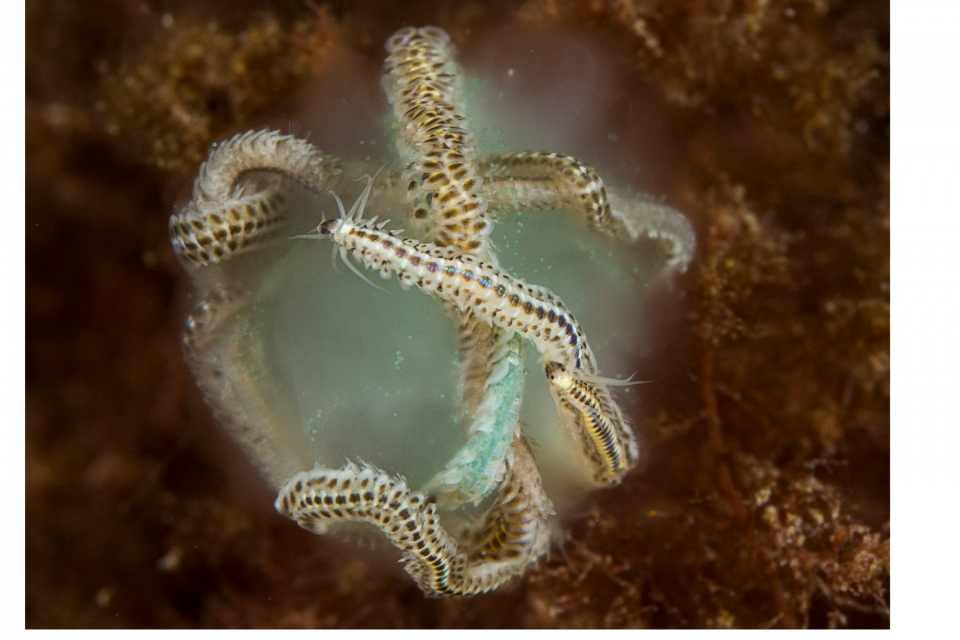
Saccocirridae regnes som en meiofaunal eller interstitiell annelidfamilie, ettersom alle artene finnes i rommet mellom sandkornene. Mens noen få arter kan være ganske små med 3 mm, er flere ganske store med opptil 3 cm i lengde. I tillegg kan de være ganske brede med en kroppsbredde på […]

Group of the month – Saccocirridae, the large small ones

Saccocirridae is considered a meiofaunal or interstitial annelid family as all species are found in the space between the sand grains. While a few species might be quite small with 3 mm, several are quite large with up to 3 cm in length. Additionally, they can be quite […]

Group of the month: Protodriloidae – just two species, but important

Protodriloidae is a family of only two species in the genus Protodriloides. Together, with the families Saccocirridae and Protodrilidae, they are part of the order Protodrilida. We will learn more about the other two families in the next two months. Hence, look forward to it. Both Protodriloides species […]

Månedens gruppe: Protodriloidae – bare to arter, men viktige

Protodriloidae er en familie med bare to arter i slekten Protodriloides. Sammen med familiene Saccocirridae og Protodrilidae er de en del av ordenen Protodrilida. Vi vil lære mer om de to andre familiene i løpet av de neste to månedene. Så gled dere til det. Begge Protodriloides-artene ser […]

Group of the month: Polygordiidae – the shiny knot worms

The next interstitial annelid family, I would like to present to you are the polygordiids. Even though these worms are part of our MeioSkag project investigating meiofaunal species in the Skagerrak, they are not truly meiofauna as their body length ranges from 1-10 cm. Hence, they are quite […]

Månedens gruppe: Polygordiidae – de skinnende knutmark

Den neste interstitielle annelidfamilien jeg vil presentere for dere, er polygordiidene. Selv om disse markene er en del av MeioSkag-prosjektet vårt, som undersøker meiofauna-arter i Skagerrak, er de ikke egentlig meiofauna, da kroppslengden deres varierer fra 1 til 10 cm. De er altså ganske store. Men fordi de […]

Door13: Suez Canal, why a one-way road?

If you look at the world today, it is impossible to ignore how deeply humans have reshaped it. We have turned forests into deserts and deserts into parks. We have warmed the atmosphere, melted ice sheets, and yet many still insist climate change is just a myth. Part […]

Group of the month: The unusual interstitial annelids – Nerillidae

As part of our new ArtsDatabanken project MeioSkag, we are investigating interstitial and meiofaunal species occurring in sediments of the Norwegian part of the Skagerrak. Among others, this includes the so-called interstitial families within Annelida. In this series “Group of the month”, I will now present the different […]

Månedens gruppe: De uvanlige interstitielle leddmarkene – Nerillidae

Som en del av vårt nye ArtsDatabanken-prosjekt MeioSkag undersøker vi interstitielle og meiofauna arter som forekommer i sedimenter i den norske delen av Skagerrak. Dette omfatter blant annet de såkalte interstitielle familiene innenfor Annelida. I denne serien «Månedens gruppe» vil jeg nå presentere de ulike familiene som ikke […]

The second of its kind – reference genome of a lamp shall

A couple of days ago we published the genome of a brachiopod species, in specific Discradisca antillarum in the journal G3. Brachiopods are a group of shelled, filter-feeding marine invertebrates also known as lamp shalls. Though they superficially resemble bivalve mollusks, brachiopods are not. Brachiopods have the shells […]

Den andre i sitt slag – referansegenomet til en armfoting

For et par dager siden publiserte vi genomet til en armfotinger, nærmere bestemt Discradisca antillarum, i tidsskriftet G3. Brakiopoder er en gruppe skallede, filterfôrende marine virvelløse dyr, også kjent som armfotinger. Selv om de overfladisk ligner på muslinger, er brakiopoder ikke det. Brakiopoder har skall på rygg- og […]

Yet another Artsdatabanken project successfully finished

Annelida, or segmented worms, is a vast and diverse group of metazoans of over 20000 species that includes, amongst others, earthworms, leeches, echiurids, sipunculids and polychaetes. With over 300 species the polychaete family Cirratulidae is one of the most species-rich and common in benthic assemblages in a variety […]

Nok et Artsdatabanken-prosjekt vellykket fullført

Annelida, eller segmenterte ormer, er en stor og mangfoldig gruppe av metazoer med over 20 000 arter, som blant annet omfatter meitemark, igler, echiurider, sipunculider og polychaeter. Med over 300 arter er polychaete-familien Cirratulidae en av de mest artsrike og vanlige i bentiske samfunn i en rekke habitater. […]

Vermetids, the laziest: Snails Who Gave Up Crawling

We all know a worm. We all know a snail. Or at least, we think we do.But nature often blurs the lines we draw so confidently. In the case of vermetid snails, also known as “worm snails,” appearances can be deceiving. These creatures look like worms but are, […]

The unknown biodiversity of annelids in European waters – a cirratulid case study

The marine biodiversity of Europe is generally considered well known comparison to other regions, especially of the global South. However, also in European waters, some habitats and regions have been scarcely studied and many species could remain to be discovered and described. This has been shown, for example, […]

Den ukjente biologiske mangfoldigheten av annelider i europeiske farvann – en fallstudie av cirratulider

Den marine biologiske mangfoldigheten i Europa anses generelt å være godt kjent sammenlignet med andre regioner, spesielt i den globale sørlige halvkule. Imidlertid er også i europeiske farvann noen habitater og regioner knapt studert, og mange arter kan fortsatt være uoppdagede og ubeskrevne. Dette er for eksempel vist […]

Månedens gruppe: Begermarker (Kamptozoa eller Entoprocta)

Rekke Entoprocta (også kalt Kamptozoa) er kjent som begermark. Globalt er det kjent 260 arter til dags dato, og 30 i Norge. Individene er små, med en kroppsstørrelse på 0,5–7 mm. Imidlertid bygger andre arter, i tillegg til solitære arter, kolonier som kan bli opptil 25 cm store. […]

Group of the months: The nicking worms (Kamptozoa or Entoprocta)

The phylum Entoprocta (also called Kamptozoa) are known as the nicking worm. Globally, 260 species are known to date and 30 in Norway. The individuals are small with a body size of 0.5 – 7 mm. However, besides solitary species, other species build colonies and these can be […]

Blanding av genomet eller ikke – Kromosomrekkefølge som en fylogenetisk markør

Etter Stian hadde vi en annen masterstudent, Pia, som konsentrerte seg om et rent bioinformatisk tema i vår gruppe. Hun forsvarte i går sin avhandling med tittelen «Evaluating the Applicability of Macrosynteny as a Phylogenetic Trait Based on an Exploration of Spiralia» (Evaluering av makrosyntenis anvendbarhet som et […]

Mixing the genome or not – Chromosome order as a phylogenetic marker

After Stian, we had another Master student, Pia, who concentrated on a purely bioinformatic topic in our group. She successfully defend here thesis with the title “Evaluating the Applicability of Macrosynteny as a Phylogenetic Trait Based on an Exploration of Spiralia” yesterday. Like Stian, Pia is also moving […]

Group of the month, May: The Krill

Featured photo: Euphausia superba, the Antarctic krill. Photo by Professor Dr. habil. Uwe Kils, uploaded to en.wikipedia.org. This file is licensed under the Creative Commons Attribution-Share Alike 3.0 Unported license. https://creativecommons.org/licenses/by-sa/3.0/ Tiny but mighty, krill are among the most abundant animals on Earth and their collective role is […]

Den unormale oppførselen til mitokondrielle genomer hos bukhårsdyr

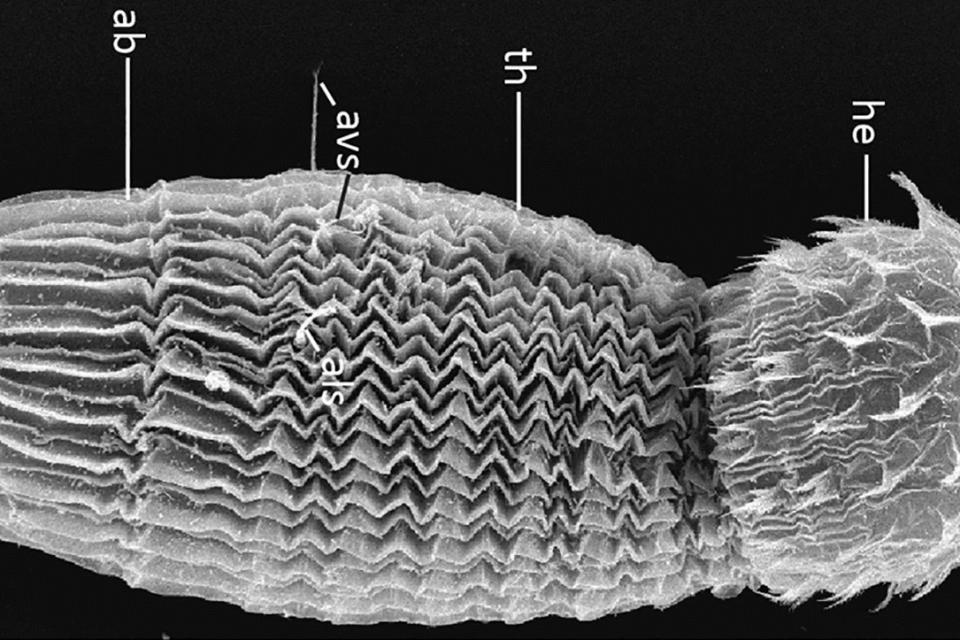
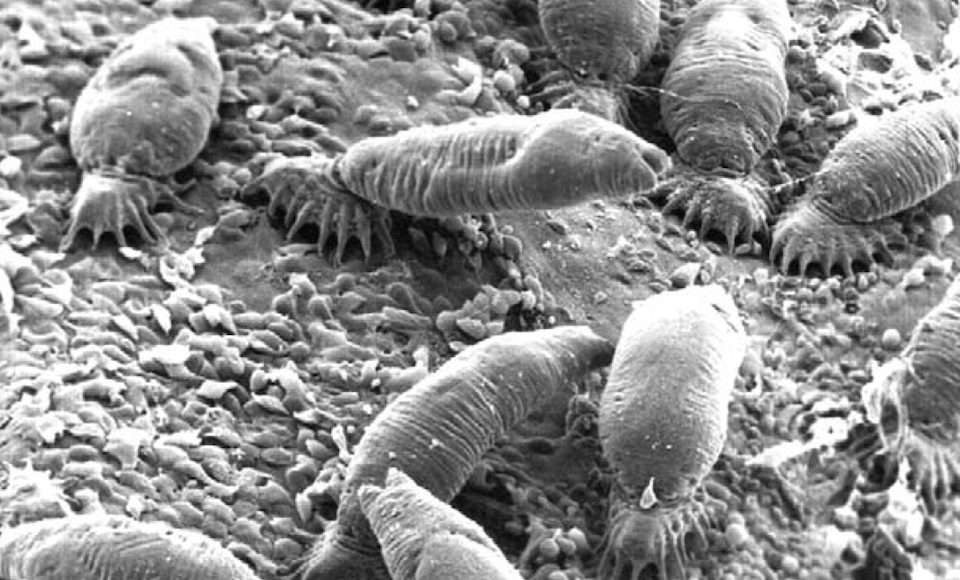
Susanna forsvarte sin masteroppgave med suksess forrige uke. I prosjektet sitt ønsket hun å undersøke utviklingen av mitokondriell genomrekkefølge hos bukhårsdyr (Gastrotricha). Gastrotricha er svært små og flate dyr, som vanligvis ikke er lengre enn 1 mm. Likevel kan de ha svært delikate strukturer på huden i form […]

The unduly behavior of the mitochondrial genomes of hairybellies

Susanna successfully defended her Master thesis last week. In her project, she wanted to address the evolution of the mitochondrial genome order of hairybellies (Gastrotricha). Gastrotricha are very tiny and flat animals, which are usually not longer than 1 mm. Nonetheless, they can have very delicate structures on […]