Group of the month, May: The Krill

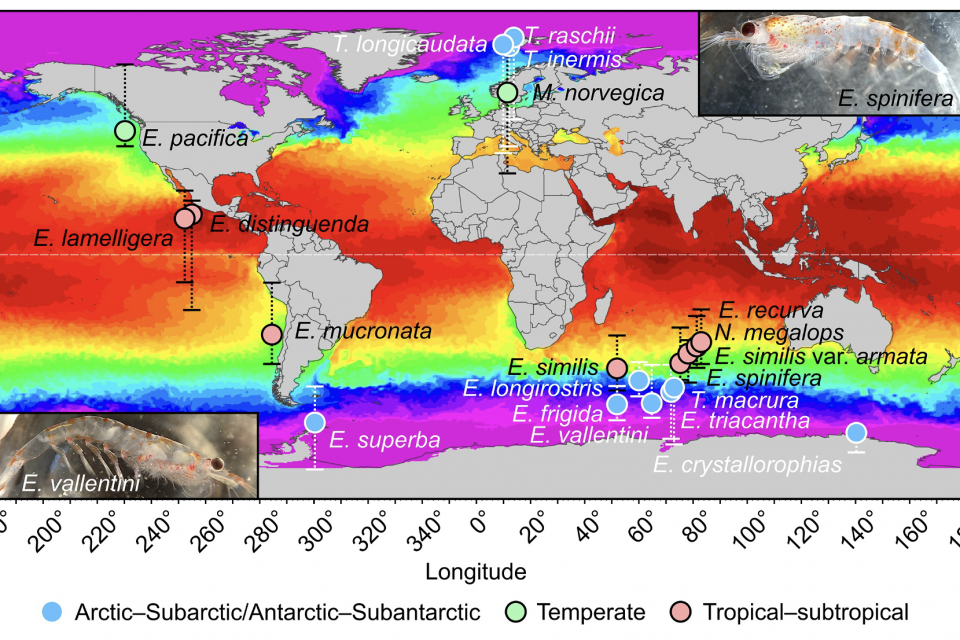
Featured photo: Euphausia superba, the Antarctic krill. Photo by Professor Dr. habil. Uwe Kils, uploaded to en.wikipedia.org. This file is licensed under the Creative Commons Attribution-Share Alike 3.0 Unported license. https://creativecommons.org/licenses/by-sa/3.0/ Tiny but mighty, krill are among the most abundant animals on Earth and their collective role is […]

Group of the Month April: Family Rhytidocystidae

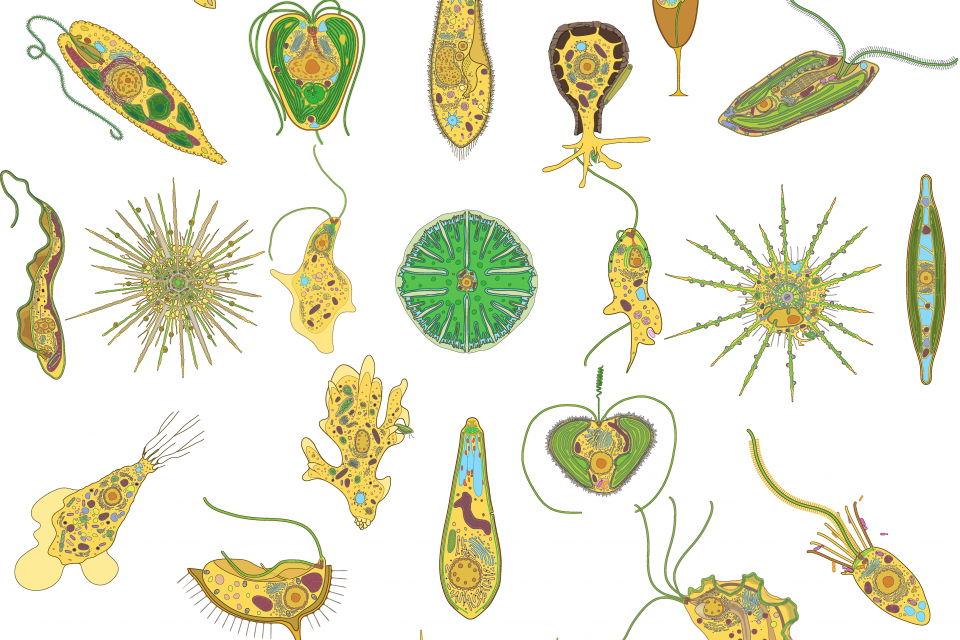
Cover image: Rhytidocystis polygordiae from the intestines of a polychaete Polygordius sp. (Scale bar = 15 μm) from Leander & Ramey, 2006. https://doi.org/10.1111/j.1550-7408.2006.00109.x For this month’s group, I’m introducing another group of enigmatic protists, the family Rhytidocystidae. They belong to the phylum Apicomplexa, which is known for many […]

Månedens Gruppe Mars: Laboulbeniales

La meg presentere månedens gruppe for mars: En sopp! Nå tenker du sikkert for deg selv: «Vent, det der er ikke en sopp. Det er helt klart bare en bille…» Og det er i og for seg riktig! La oss zoome litt lengre inn: Tankerekken fortsetter: «Hmm… Det […]

Group of the Month March: Laboulbeniales

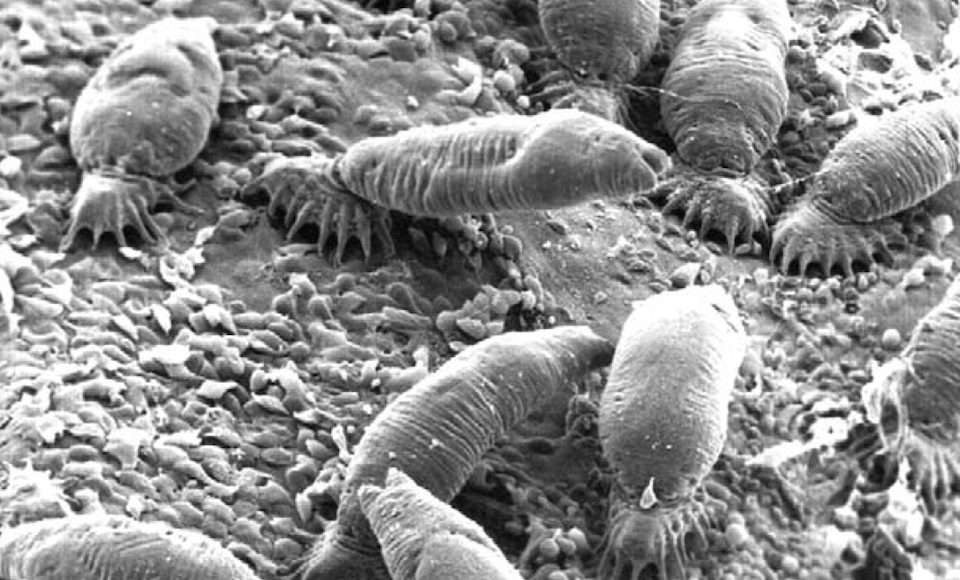
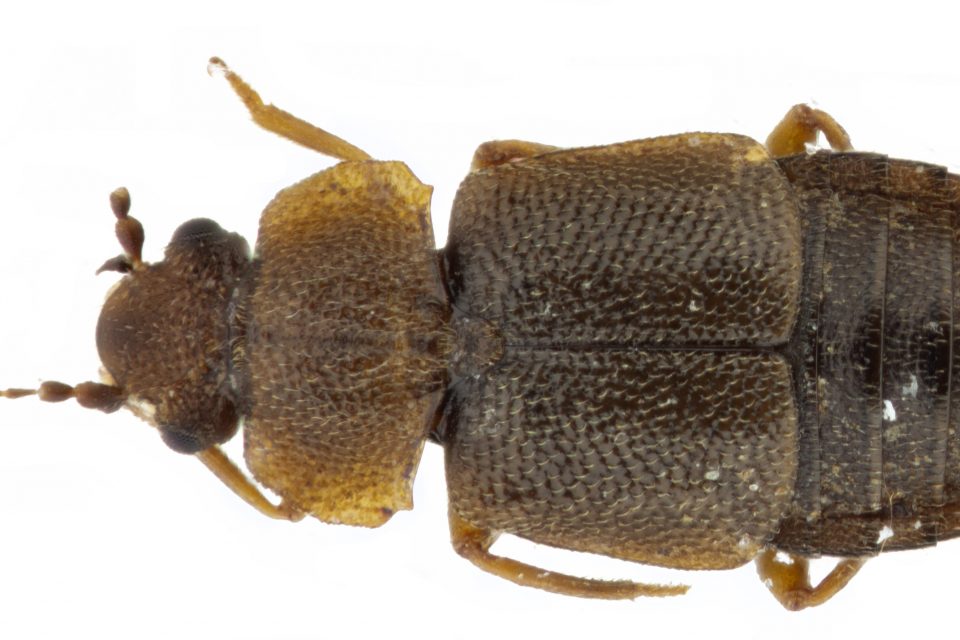
Let me introduce you to the Group of the Month for March: A fungus! At this point you are probably thinking to yourself: “Wait a minute, that’s not a fungus. That’s clearly just a beetle…” And for the most part, you’d be right! Let’s zoom in a bit […]

Den unormale oppførselen til mitokondrielle genomer hos bukhårsdyr

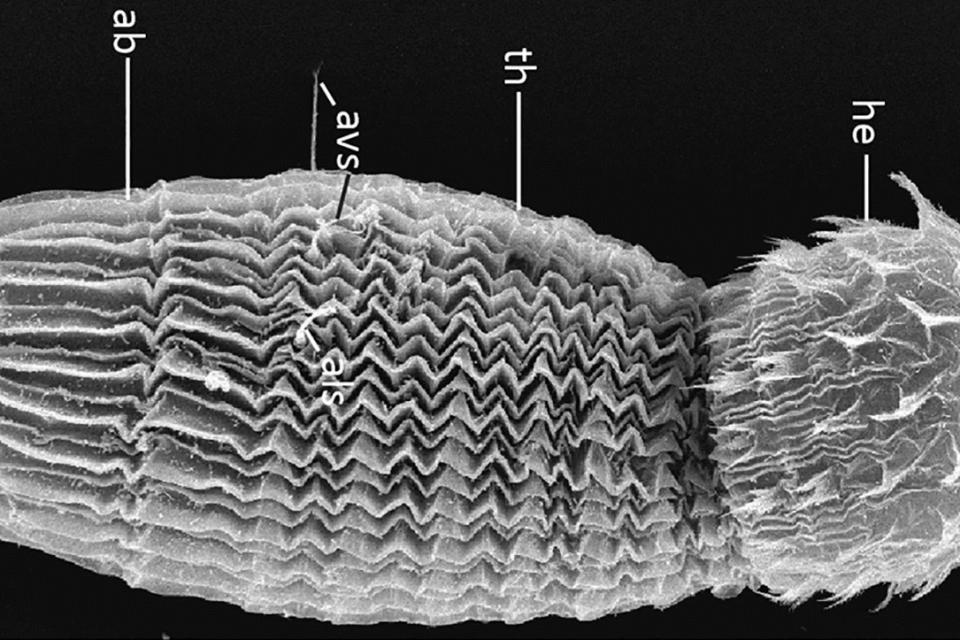
Susanna forsvarte sin masteroppgave med suksess forrige uke. I prosjektet sitt ønsket hun å undersøke utviklingen av mitokondriell genomrekkefølge hos bukhårsdyr (Gastrotricha). Gastrotricha er svært små og flate dyr, som vanligvis ikke er lengre enn 1 mm. Likevel kan de ha svært delikate strukturer på huden i form […]

The unduly behavior of the mitochondrial genomes of hairybellies

Susanna successfully defended her Master thesis last week. In her project, she wanted to address the evolution of the mitochondrial genome order of hairybellies (Gastrotricha). Gastrotricha are very tiny and flat animals, which are usually not longer than 1 mm. Nonetheless, they can have very delicate structures on […]

Hva er det neste som skjer med smådyrene?

I forrige uke publiserte vi en artikkel om meiofauna og hvorfor det er viktig å studere dem, og hvilke vitenskapelige spørsmål som bør tas opp i neste omgang. Artikkelen «Fundamental questions in meiofauna research highlight how small but ubiquitous animals can improve our understanding of Nature» ble publisert […]

What’s up next for the small animals?

Last week, we published an paper on meiofauna and why it is important to study them and which scientific questions should be addressed next. The paper “Fundamental questions in meiofauna research highlight how small but ubiquitous animals can improve our understanding of Nature” was published in Communications Biology. […]

Vellykket betjening av det europeiske samfunnet for genomisk biodiversitet

Biodiversity Genomics Europe (BGE) er et fellesskapsdrevet prosjekt finansiert av EU for å etablere et rammeverk for koordinering av DNA-strekkoding og genomsekvensering i hele Europa. Som en del av genomstrømmen i BGE sekvenseres referansegenomer fra arter fra kritisk europeisk biologisk mangfold. En viktig oppgave i dette arbeidet var […]

Successfully served the European biodiversity genomic community

The Biodiversity Genomics Europe (BGE) Project is a community-driven effort funded by the EU to establish a framework for coordinating DNA barcoding and genome sequencing across Europe. As part of the genome stream of BGE, reference genomes from species from critical European biodiversity are sequenced. An important task […]

Group of the month: Cycliophora – the ringbearers and the “Norwegian” phylum

This month I will present to you a very small phylum of animals – both in size and in number of species. The phylum Cycliophora, which means the ring-bearer, comprises exactly one genus and two described species. These species are about 350 µm in body length, which is […]

Månedens gruppe: Cycliophora – ringbærerne og den «norske» fylumet

Denne måneden vil jeg presentere en svært liten dyregruppe – både i størrelse og i antall arter. Cycliophora, som betyr ringbærer, består av nøyaktig én slekt og to beskrevne arter. Disse artene er ca. 350 µm i kroppslengde, noe som er mindre enn en halv millimeter og omtrent […]

Group of the Month: Tree ferns – an Australian holiday discovery

A visit to the Adelaide Botanic Garden is certainly high up on the to-do list of a biologist visiting the capital of South Australia. In December 2024, a couple of days before the Australian midsummer, I had the pleasure to visit the Adelaide Botanic Garden and explored the […]

Door 23: Struggles, Setbacks & Solutions

I’m three out of four semesters deep into an MSc, meaning that in a few short months I will be delivering a completed thesis, with detailed results and an in-depth discussion. I’ve had a timeline laid out since the very beginning and am largely on track. That isn’t […]

Door 22: Mystery bird uniting different museum groups

Following the example of Pia’s post about the gift of collaboration, I will introduce you to a side project I did with two colleagues from a different research group at today’s door. It started with a strange sighting from a friend: a bird that looked like a species […]

Genomikk i det små – å få det gjort

Som nevnt i den første kalenderluken i årets adventskalender, er genomikk av smådyr utfordrende. I går ble Nhu Dinh ferdig med masteroppgaven sin, men hun fikk også erfare noen av utfordringene knyttet til smådyr og genomikk. Problemet er at noen av dem er så små og har så […]

Genomics of the small stuff – getting it done

As mentioned in the first calendar door of our advents calendar this year, genomics of small animals is challenging. Yesterday, Nhu Dinh successfully finished her Master thesis but she also experienced some of the challenges related to the small animals and genomics. The problem is that some of […]

Door 21: The evolution of stress related genes in parasitic flatworms

It is always a pleasure if international scientific cooperations deliver exciting results. This was the case with my cooperation with colleagues at the University Hasselt, Belgium. The study was a key component of the PhD thesis of Armando J. Cruz‑Laufer who also coordinated the drafting of the scientific […]

Årets siste forsvar – med suksess

Denne uken var den siste hele uken før juleferien, hvor alle går på sin velfortjente ferie. Men til tross for at det har vært en rolig uke på museet, var det en stor dag for Nhu Dinh i dag. Hun forsvarte nemlig masteroppgaven sin i dag. Gratulerer Nhu […]

The last defense of the year – successfully

This week was the last full week before the Christmas break where everybody goes on their well deserved holidays. However, despite all the slowing down at the museum this week, today was a big day for Nhu Dinh. She successfully defended her Master thesis today. Congratulations Nhu Dinh. […]

Door 20: Looking at the past to understand the future of Leopard Seals

Cover picture by Sue Flood Last time, I wrote about how glacial-isolation caused the divergence of a small population of ringed seals in the Ilulissat Icefjord, West Greenland. The text ended with a final consideration on the importance of developing research plan to retrieve molecular data for Arctic […]

Door 19: The genome of the flatworm model species Schmidtea mediterranea

Earlier this year in September Ivanković and colleagues published the results of a study coordinated by the research group of Jochen Rink at the Max Planck Institute for Multidisciplinary Sciences, Göttingen, Germany and presented highly improved genomes of the four planarian flatworm species from the genus Schmidtea. These […]

Door 18: Forgotten Reefs; Struggles for Survival in the Strait of Hormuz

For the next door of our Advent calendar, I’d like to take you on a journey to the Strait of Hormuz, one of the most politically significant waterways. It is located between the Persian Gulf and the Gulf of Oman in the northern Indian Ocean, and acts as […]